Editor’s note: We use the British spelling of hypernormalisation to maintain consistency with Adam Curtis’ documentary of the same name.
Sometimes you have to sit back, place your hands behind your head and turn to the sky to ask, “What’s the point of any of this paranormal stuff?”
Paraphrasing from her then forthcoming book “American Cosmic” on Radio Misterioso in 2017, religious studies professor Dr. Diana Pasulka said: “This is basically an IQ test. If people don’t pass the IQ test of even imagining that this could be a possibility — that there could be non-human intelligent life — I really don’t want to talk to them.”
Now nearly a decade later, does the IQ test still hold? Certainly, in the abstract, it works as a general gauge of intellectual curiosity. If you said, “I wonder what life on other planets might be like,” and a person responded by saying, “I don’t believe in aliens,” they’d come off as rather dull for refusing or being unable to engage with the hypothetical.
However, on the other side are those who are a little too excited and ready to believe. The government releases blurry images and files claiming they prove something. What exactly? It doesn’t matter. The folks most excited for the release had made up their minds about its significance before they even knew what was in the files. That’s equally dull in a different way.

That skeptics and true believers are so very certain in their outlooks is nothing new. What’s concerning of late is finding this same quality popping up in the casual and paranormal-curious crowd. I’ve had a handful of family and friends come to me, the resident weirdo, within the past six months with their odd experiences, then get either upset or retreat when I give my weirdo interpretation, as if they’d already made up their minds about what happened and just wanted spooky validation.
As I’ve been mulling all this over, I’ve had two quotes bouncing around my mind. The first is from Charles Fort, who in his book “LO!” wrote, “I believe nothing of my own that I have ever written.”
The second is Alan Watt’s well-known, “If you get the message, hang up the phone,” approach to psychedelic use.
Each quote has to deal with the idea of certainty to a certain degree. Fort kept a cool ambiguity toward the anomalies he chronicled, operating in the “something is happening but I’m not sure what” space. It’s the same space Driftless Times attempts to occupy.
Then with Watts, he’s stressing the importance of integrating a psychedelic experience. In the full quote, he compares psychedelics to scientific instruments as another way to view and understand the world. If you never stop to try to understand what you’ve experienced, and instead do the drug again and again, it’s like you haven’t experienced anything at all. The first step to understanding something is sitting with it. You got the message? Great! Now figure out what it means.
What’s my point? It seems people have turned very certain and distressed in equal measure. Then something happens that should shake them. They experience a shot of wonder, the mystical or something just too outside their idea of reality to square rationally; events that can fundamentally change people’s worldviews.
Yet what happens, at least to those I’ve spoken with, is that they’ve immediately slotted these experiences into a box. There’s no approach from ambiguity. No chance to get, let alone decode, a message. If you probe into the experience trying to do so, they double down, get upset, act like everything is normal — hypernormal, you could say.
Oops! All Hypernormalisation
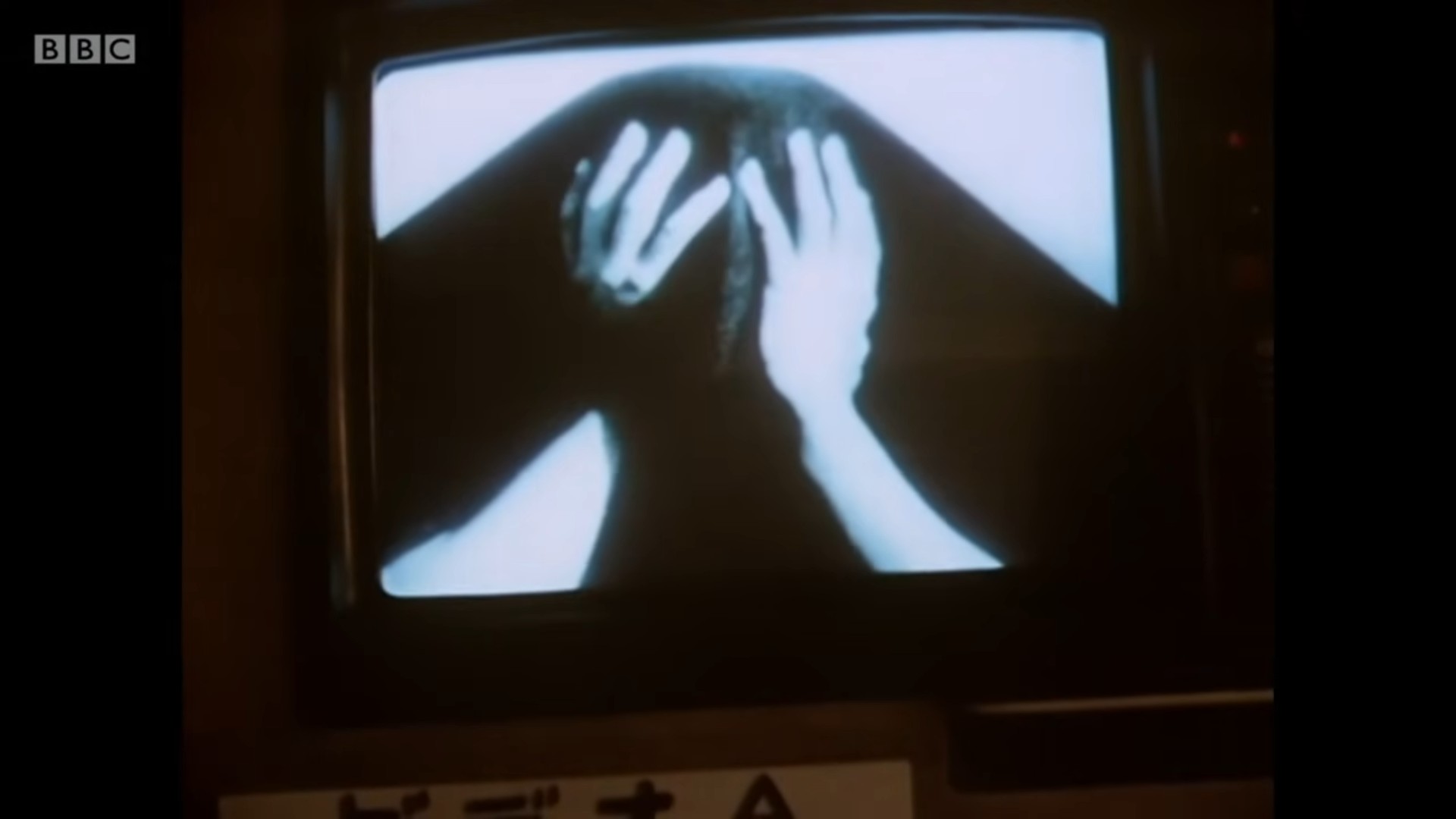
For those unfamiliar with the idea, hypernormalisation was coined by anthropologist Alexei Yurchak in his 2005 book “Everything Was Forever, Until It Was No More: The Last Soviet Generation” and received broader attention as the basis of Adam Curtis’ 2016 documentary “HyperNormalisation.”
“What he [Yurchak] said, which I thought was absolutely fascinating, was that in the 80s everyone from the top to the bottom of Soviet society knew that it wasn’t working, knew that it was corrupt, knew that the bosses were looting the system, know [sic] that the politicians had no alternative vision. And they knew that the bosses knew that they knew that. Everyone knew it was fake, but because no one had any alternative vision for a different kind of society, they just accepted this sense of total fakeness as normal,” Curtis wrote in 2020.

What’s most interesting about hypernormalisation as a phenomenon isn’t the acceptance of dysfunction as function, but that it’s predicated on a lack of vision. It’s a bubble that could be popped by belief in anything different, a death spiral of certainty and acceptance.
In “HyperNormalisation,” Curtis takes the impacts of this lack of vision a step further, drawing links between popular sentiment and world events. He shows that it’s not just a lack of vision that entrenches hypernormalisation, but also belief in what will likely come to be, highlighting how pessimism consumed the American mind at the end of the twentieth century.
“… In America, all optimistic visions of the future had also disappeared. Instead, everyone in society, not just the politicians, but the scientists, the journalists and all kinds of experts, had begun to focus on the dangers that might be hidden in the future. This in turn created a pessimistic mood that then began to spread out from the rational technocratic world and infect the whole of the country. And everyone became possessed by dark forebodings, imaging the very worst that might happen,” Curtis narrates.
Following the narration, the documentary features clips from different disaster movies of the late 90s and early 2000s. After two minutes of watching fictional skylines and being destroyed, the film cuts to footage of 9/11.
Curtis might not be saying that a steady diet of mass media portrayed destruction literally led to the terror attacks of 9/11, but he’s suggesting a link. The country’s zeitgeist was primed for something catastrophic and that nervous energy was expressed through the media. That the real event so closely mimics the fictional portrayals of destruction highlighted by Curtis may be merely a morbid coincidence.
Or maybe he thinks America actually hexed itself through pessimism? In between the scenes of fictional destruction and real life, there’s a brief surrealist interlude with imagery that might imply Curtis suspects the pessimistic beliefs he spoke of played a greater role than not.

Maybe Curtis thinks people at the end of the twentieth century believed too much of what they wrote and needed to hang up the phone; that if they had focused on something other than the catastrophe that they were convinced was coming, maybe they could have done something to avoid it?
Again, it’s a bit of a stretch to suggest a literal link, but it might be fair to wonder if an entire society can succumb to a self-fulfilling prophecy. Or how many little, or personal, prophecies have to stack before you’re too entrenched to avoid the worst?
Maybe it comes back to imagination and a lack thereof.
I Really Don’t Want to Talk to Them
I’ve written about hypernormalisation and how the paranormal intersects with it in my essay “Hypernormalisation and the Paranormal Media Trap.”
The crux of that piece is that, since anomalous phenomena and events are, by their very nature, reality-bending, and hypernormalisation is predicated on a lack of vision, when people experience the “impossible,” it might shock them out of the certainty of hypernormalisation.
In other words, if you don’t believe in ghosts, but then you see a ghost, that should make you reconsider a lot more than just the ghost. Reality as you knew it is gone; the doors are wide open — anything might be possible that you’d once considered not.
What I’ve found in the two years since writing that essay is that this is not the case. Maybe at one time it was. Today, I am not so certain. This is not to say that I no longer believe the arguments I made in my previous essay. I still fully contend that anomalous phenomena can act as boundary-pushing, horizon-expanding events. In fact, I’ve come to wonder if that isn’t their primary function.
Researcher and writer Zeila Edgar stresses how paranormal encounters often hinge on perfect timing. Events can be so brief, and people need to be in just the right place at just the right time to witness them, that they raise questions not easily answered. Does a pukwudgie cross the road if there’s no one there to see it? Or does a pukwudgie only cross the road when the right person is there to see it? I’m inclined to believe it’s the latter.
I’ve had a handful of strange experiences in my life. I don’t usually talk about them because to a listener, they’d be nothing. However, they were very personal to me. The most impactful event happened when I was at a crossroads in my young career, taking a risky plunge that I was debating backing out of until that event — and it’s a very good thing I stayed the course.
I think many strange events are rooted in the personal. However, they’re only effective if you maintain that Fortean ambiguity and/or know when to hang up the phone and decipher the message. If you see the pukwudgie and then spend each night hunting for it, you’re doing neither. Alternatively, just wanting a campfire story isn’t always great either.
Someone recently told me about the strange things happening in their home, culminating in a light fixture with no way to loosen it crashing to the floor of their bedroom. There was a lot of symbolism in their story. The source of light in your sanctuary exploded for no discernible reason? Shouldn’t take an English major like me to pick up on what that could mean, but when I probed, they got irritated and said there was probably a rational explanation.
What struck me most about this interaction was that they presented the story as a paranormal event. It wasn’t until I asked them if they had been ruminating on anything that they turned heel back to materialism. That reaction, to me, is more interesting than the supposed paranormal event. It was fine for this to be paranormal if it was campfire spooky, but the idea of it having meaning apparently made it need a different explanation.

More troubling than how the everyday person might be taking in these events are the true believers, those who are so ready to accept that they’ll take any claim or document drop as proof of their conviction. This allows any manner of grifters, hoaxsters or worse to lead them around by the nose, even if their hearts might be in the right place. There’s no approach from ambiguity, nor an attempt to decipher a message.
The ardent skeptics can be accused of the same, albeit from the opposite direction. So convinced humanity has it all figured out that they see no need even to answer the phone when it rings. As writer and experiencer Jeremy Vaeni posits in his book “I Know Why the Aliens Don’t Land“:
“That’s the thing that gets me about the abduction phenomena: either humans are interacting with beings of seemingly higher intelligence — and that’s the most important event in human history — or there is a worldwide mass delusion going on. And wouldn’t that be one of the most important psycho-sociological issues in human history? I mean, where is the science here?”
Where indeed? It almost makes you wonder, “What’s the point of any of it?”
If we’re all so certain about the anomalous, that which is inconsistent with or deviating from what is usual, then maybe all anyone sees during their encounter with the unknown is their own expectations. If you’re lucky, that’ll be something better than what you currently have.

Leave a Reply