
In the opening to its early episodes, Rod Serling invites viewers into the Twilight Zone with the following description: “… It is the middle ground between light and shadow, between science and superstition, and it lies between the pit of man’s fears and the summit of his knowledge” (Serling, 1959-1964).
Today, Western society finds itself trapped not in the Twilight Zone but entrenched in economic systems and political models so strong they capture participants’ ability to see beyond the reality the two create. This condition is called hypernormalisation, and it may be that strange events, not unlike those from Serling’s stories, hold the key to our collective salvation in the form of reality-shattering anomalous phenomena.
Hypernormalisation, first coined by Alexei Yurchak in his 2005 book Everything Was Forever, Until It Was No More: The Last Soviet Generation (Yurchak, 2005) and later popularized in 2016 by Adam Curtis’ documentary HyperNormalisation (Curtis, 2016), can be best summed up as: A societal system in which all participants from the absolute highest of powers to the lowliest of observers project and accept an artificial, simplified view of the world rather than deal with the complexities of reality, often despite the artifice’s failings, due to either an unwillingness or inability to imagine an alternative to the status quo.
Anomalous phenomena is an umbrella term for any and all occurrences and experiences that fall outside the scope of rational and material understanding. Colloquially, it can be used interchangeably with “paranormal phenomena” or “the paranormal.” For the purposes of this essay, “anomalous phenomena” will be used for critical analysis, and “paranormal” will be used when discussing said phenomena’s broader cultural appeal, e.g., paranormal media/ the paranormal industry.
While anomalous phenomena are myriad, each with their own disciplines and understandings, the common factor between all are the hints that these phenomena leave of a reality greater than the one currently understood – acting as possible forces to drive a society out of hypernormalisation. If an alternative to the status quo cannot be conceived of by those caught in a hypernormalised society, then experiencing phenomena that shouldn’t exist in the agreed-upon status quo reality could force individuals into an alternate view.
However, just as these phenomena may act as a driver out of hypernormalisation, so too can they fall victim to it.
This essay aims to examine hypernormalisation as it relates to anomalous phenomena and paranormal media, how phenomena could be the driving force to shift society forward from beyond the status quo and into a future it cannot imagine for itself, and at the same time being all too susceptible to being subsumed and instead used to fuel the very societal and cultural mechanisms in need of escaping.
Defining Hypernormalisation
Yurchak coined the term hypernormalisation to describe the paradoxes of Soviet society prior to the USSR’s dissolution. Curtis, intrigued by Yurchak’s idea of hypernormalisation as it related to what he saw happening in the world today, led to his 2016 documentary.
Writing in Adbusters Magazine, Curtis said, “What he [Yurchak] said, which I thought was absolutely fascinating, was that in the 80s everyone from the top to the bottom of Soviet society knew that it wasn’t working, knew that it was corrupt, knew that the bosses were looting the system, know [sic] that the politicians had no alternative vision. And they knew that the bosses knew that they knew that. Everyone knew it was fake, but because no one had any alternative vision for a different kind of society, they just accepted this sense of total fakeness as normal” (Curtis, 2020).
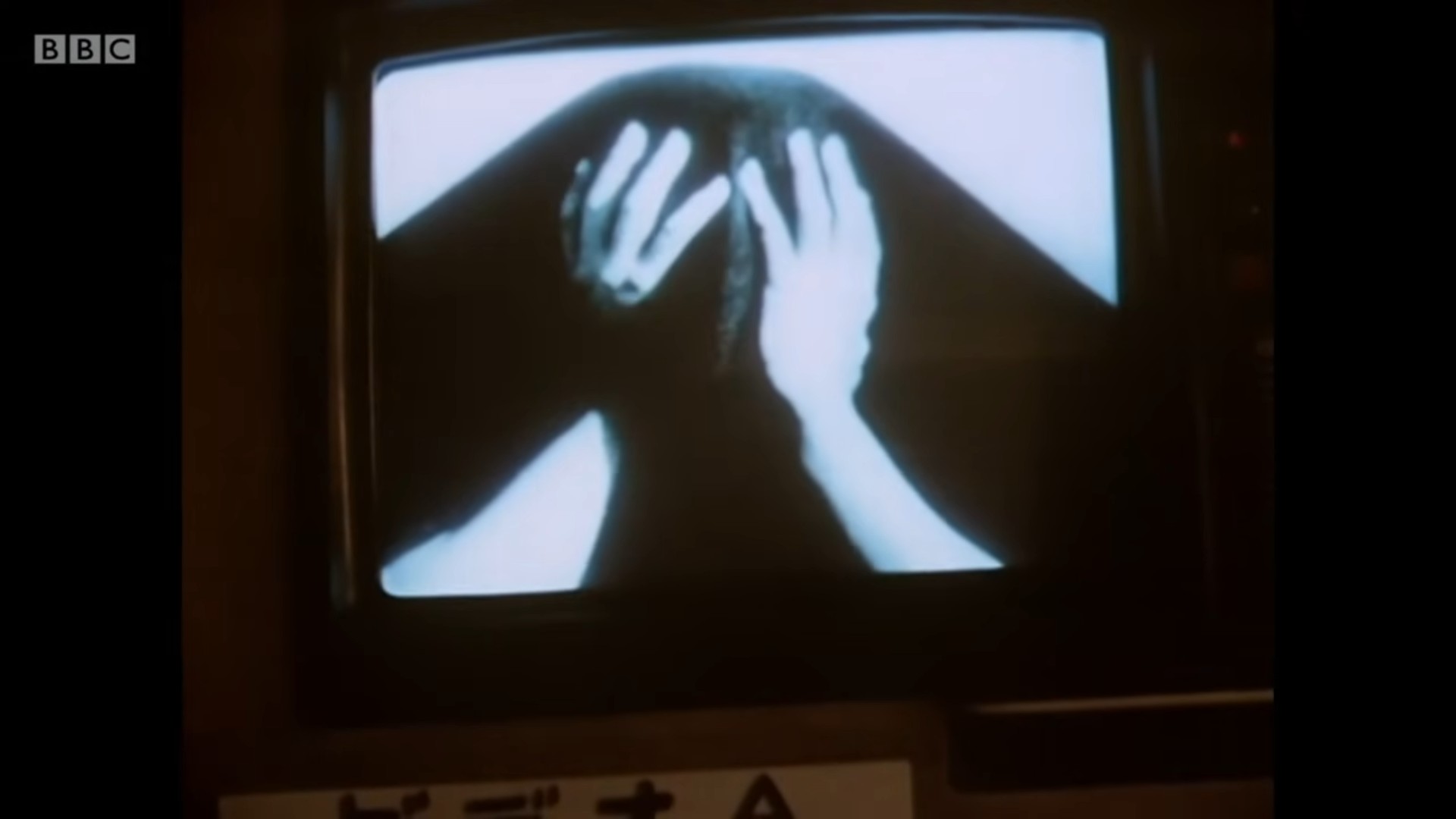
In HyperNormalisation, Curtis applies the idea of hypernormalisation and the principles Yurchak saw at work in the late Soviet era to Western society from the 1970s onward. He argues in the documentary that the world had become too complex for the old way of politics to handle. Power was slowly ceded to corporations and monied interest, resulting in society’s current state of hypernormalisation – where individuals are disillusioned with their power to impact change, money pulls most of the levers, and politics merely works in hand to keep it all stable.
The result is a world unable to handle today’s complex challenges, such as rising political violence and climate change, while simultaneously unable to imagine a way out of and beyond the system that has been created.
Curtis’ critique is not that modern Western society is in the exact same straits as the failing Soviet Union was — modern Western society has its own unique factors at play — but society has succumbed to hypernormalisation nonetheless.
Curtis expands on how he sees hypernormalisation at play in modern society on the July 22, 2017, episode of Russel Brand’s Under The Skin podcast:
“[There] is a sense among a lot of people that things are a bit odd and unreal, and sometimes fake, and that those in charge know that they’re not in charge and they know that we know they’re not in charge of things – that everything is a bit chaotic, uncertain, we distrust everyone in charge. We also know those in charge allow a great deal of corruption to carry on without doing much about it. We know that they’re not in control of the economy. They know that we know they’re not in control of the economy. But at the very same time, we are so much a part of the system that we don’t have any vision of an alternative” (Curtis, 2017).
Central to Curtis’ analysis is society’s retreat towards individualism, particularly the left and counterculture. He notes that starting in the 1970s, as politics ceded power to money, the left and counterculture turned from collective shows of force and protests inward towards art, attempting to change people’s minds rather than combat the system via community and organization.
Today, individualism has been exacerbated by the internet, which, via algorithms and the aggregation of people based on similar interests, has created echo chambers where individuals rarely see something that challenges their worldview.
This, of course, takes hypernormalisation to levels not seen during the Soviet era. Today, every person can exist in a micro-bubble of reality different from the cyber-curated realities of their neighbors. Fortunately for the Soviets, they all had to share the same hypernormal reality; today, hypernormalised society exists in layers specific to the individual.
The Indefinable
By definition, anomalous phenomena are indefinable, as they often refuse clean categorization and the ability to quantify them in a measurable, scientific way. If one could pin down these often incredibly personal experiences, they would no longer be anomalous.
Adding to the difficulty are the myriad of different subsets under the umbrella of anomalous phenomena. Furthermore, each broad anomalous subject will have various subsets within it. For instance, the field of psi study is so broad that it encompasses any anomalous property of the human mind, such as telekinesis, extrasensory perception (ESP), telepathy, precognition, etc.
Even in areas where entire industries have grown, the phenomena are so dense that simple definitions and understandings don’t do justice. For example, haunting phenomena cases can be separated into ghosts, poltergeists, non-human spirits, and more as part of the phenomenon’s ecology. Any one of these individual areas can bear years of research and often will overlap with other anomalous areas — poltergeists being a prime example as a long-studied subject for both haunting and psi researchers.
However, the common factor between all anomalous phenomena are the hints each phenomenon leaves of a reality greater than the one society generally conceives of and is taught by the sciences.
Material science leaves no room for an afterlife. However, there are innumerous accounts throughout history to the present day of signs given to families, if not outright visitation from, their deceased loved ones, suggesting human consciousness is greater than what is currently scientifically understood.
So then, the two are at odds: personal experience with anomalous phenomena of life after death and the quantifiable understanding of reality. It is likewise with nearly all other anomalous phenomena.
This applies even to phenomena that offer themselves up to easily being put into a materialistic worldview, such as UFOs and certain cryptid phenomena. The former can be chalked up to extraterrestrial visitors or unknown military tech, and the latter a yet-to-be-discovered species. Nevertheless, as reported by witnesses, these material definitions ignore the multitude of anomalous properties each carries. These properties, often called high strangeness, a term coined by researcher J. Allen Hynek to describe the anomalous aspects of UFO encounters, do not easily slot into the materialist worldview currently held by society (Hynek, 1972).
The fact that these anomalies do not conform to current models and understandings of the world opens them to the ridicule of science and society while leaving the experiencers of them often changed if they choose to accept what has happened to them instead of ignoring it. These changes can be earth-shaking depending on how the experiencer folds them into their worldview.
If the critical component to hypernormalisation is the inability of the masses to imagine alternatives to the current paradigm, then anomalous phenomena could be a key to opening the door of possibilities.
Indeed, famed researcher Jacques Vallée has posited a similar theory about the UFO phenomenon – that it is acting as a control mechanism for humanity, manipulating society and human belief. It could be why, Vallée has argued, the UFO phenomenon wears different masks throughout the years, always appearing as something just beyond what humanity is currently capable of, such as dirigibles and airships when flight was still in its infancy, then as extraplanetary vehicles when rocket science and space exploration were being born (Vallée, 1979).
Further, experiencers such as Whitley Streiber and Jeremy Vaeni argue that the UFO and larger abduction phenomena’s aims are greater than mere technological strides, instead working to advance human consciousness or wake people up to some greater truth of the universe, reality, and themselves.
The Subsumption of Possibilities
The same qualities that make anomalous phenomena a possible driver out of hypernormalisation also allow it to be easily subsumed by it. As they exist without scientific and societal consensus, this allows all manner of interpretations of phenomena to coexist at the same time. Of course, this means certain interpretations of phenomena will be more prevailing than others, leaving them open to be shaped and used by those benefiting from the status quo.
Curtis highlights how the UFO phenomenon was utilized in the 1980s to cover up the US’s advanced aerial and weapons programs. He cites the manipulation of Paul Bennewitz as a prime example of the weaponization of the phenomenon as a perception management tool used by the American government on the public (Curtis, 2016).
Another well-known example of the weaponization of phenomena is Operation Wandering Soul, a psychological warfare effort devised by US forces that exploited Vietnamese cultural beliefs of the dead during the Vietnam War. The Vietnamese culture seeks proper burial of the deceased, and should that not occur or be possible, it’s feared the person’s soul will wander the Earth as a tortured spirit. The US used these beliefs to its advantage against the Viet Cong, developing recordings they would play through the Vietnam jungles of supposed spirits warning their fellow living soldiers to abandon the war effort lest they meet a similar fate.
Operation Wandering Soul’s success was mixed. When the Viet Cong learned the voices were fabrications, the recordings only accomplished giving away the US force’s positions. However, the US claims the program was a success. Either way, it’s obvious that governments and militaries see a benefit in weaponizing anomalous phenomena (Wikipedia contributors, n.d.).
Corporations have also seen the value of anomalous phenomena, curating an endless supply of paranormal-themed media over the years. While the paranormal has always had its place in entertainment, the 2004 premiere and success of Ghost Hunters kickstarted the commercialization of the paranormal via documentary-style, reality TV programming.
These kinds of shows lack the nuances a serious study of anomalous phenomena requires. Regardless, they are wildly successful. Today, the stars of Ghost Hunters, Grant Wilson and Jason Hawes, are each valued at $3 million. Zak Bagans of Ghost Adventures, the paranormal entertainment industry’s arguably most prominent star, is estimated to be worth $30 million (CelebrityNetWorth, n.d.).
The paranormal activity “caught” in this type of programming is often said to result from negative or evil entities. Nearly all paranormal media plays into the horrific and darker elements of phenomena. Obviously, fear sells. These programs are usually informed by or reinforce notions other fictional horror media has inserted into the cultural zeitgeist on a topic.
For example, in the fourth episode of the 14th season of Ghost Adventures, the investigation of the Double Eagle Restaurant and Dona Ana County Courthouse focuses on poltergeist activity. The synopsis of the episode reads, “Both buildings have been plagued by death, leading to poltergeist activity that torments investigators.”
The episode features one investigator challenging the poltergeist to attack him, with a camera aimed at his neck for the occasion, though nothing comes of it. However, EVPs of “choke” and “the ghost” are claimed to be captured, and objects appear to move on their own. One investigator’s summation of it all? “This thing’s toying with us” (Ghost Adventures, 2017).
While what they captured, if real, is interesting, it never goes anywhere other than simply being for the entertainment of the show’s viewers. There is no deeper analysis of what is going on other than a couple of guys being messed with by a not-so-nice spirit.
Actual poltergeist research is far more nuanced. While poltergeist phenomena can present in unsettling, if not downright disturbing, ways, researchers have delved deep into the subject to understand its intricacies. Classification systems have been developed to determine whether a case involves discarnate entities, for example, and patterns have been determined between cases spanning time and location.
For a succinct breakdown of this research, see Alan Murdie’s essay “Poltergeist and High Strangeness” in Deep Weird, edited by Jack Hunter (Murdie, 2023).
Imagine if Bagans and his crew were informed, or cared to be informed, of this research. They could have applied it to what they captured, enriching their investigation and, in turn, giving their audience a deeper understanding of the subject matter. However, that would stray into educational programming and away from the fear-sells-strategy of the network employing them.
Perception Management
One of the significant issues with this dumbed-down, fear-sells approach to anomalous phenomena is the worldview it shapes. As these programs frame themselves as authentic, their viewers know no better than to assume their legitimacy and the legitimacy of the quote-unquote experts filmed. Only if a viewer has the framework to understand how either reality television is produced or has studied anomalous phenomena to notice how a program glosses over its intricacies, there is no reason for them to assume anything other than what they are shown and told is factual and well-informed. At least with a horror movie, a viewer always knows somewhere in their head that what is being shown is fiction.
To demonstrate, the following are YouTube comments left on the Ghost Adventures episode mentioned above (presented verbatim):
“I’m always amazed by Zak, Aaron, Jay & Billy for working so hard investigating different locations for ghost activity. They have a scary job I couldn’t do it. I’d probably pass out in fear. I applaud the guys for being a strong force together as GA team.”
“They’re not gonna scratch you when you give them permission. That takes the control from them.”
“If you don’t believe in this then why watch I think Zak is very truthful on gathering paranormal activity he doesn’t need to make up thing’s.. not everyone will actually understand what Zak’s trying to do.. I understand him very well, and I believe in him.”
“Every paranormal investigator on YouTube should be grateful for these guys paving the way!”
Now granted, there are detracting comments on the video – some, though, in support of more perceived “realistic” paranormal programming – but there are easily more comments in favor of the investigation and the paranormal than against or skeptical of it at the time of writing.
Considering the pervasive influence of paranormal media, it’s critical to consider the co-creation hypothesis proposed by Greg Bishop in his essay “The Co-Creation Hypothesis: Human Perception, the Informational Universe, and the Overhaul of UFO Research” in UFOs: Reframing the Debate, edited by Robbie Graham (Bishop, 2017).
Bishop’s ideas are centered around UFO phenomena and close encounters, but he doesn’t exclude the hypothesis’ application to other anomalous phenomena. In short, Bishop suggests that the cultural background and expectations of the experiencer/ observer influence encounters with anomalous phenomena. This can either be due to how the human mind and memory work in trying to make sense of encountering something so outside of the witness’ understanding of reality or that the phenomena may borrow ideas from a person’s mind to mold itself with either out of necessity to manifest or to evoke something in the witness.
“In the act of first experiencing the event, and then, more importantly, in remembering it and telling the story about it to ourselves and others, we are adding many layers of cultural baggage and other input that help us make sense of the experience. In so doing, we are taking ourselves step-by-step away from the original impressions,” Bishop says (Bishop, 2017).
One of the more compelling examples of the co-creation hypothesis is the case of Dorothy Izatt, as recounted in the book Contact with Beings of Light: The Amazing True Story of Dorothy Wilkinson-Izatt by Peter Guttilla (Guttilla, 2003).
Izatt’s experiences began November 9, 1974, when she was 52 years old, after her afternoon routine of prayer and reflection, which she called “quiet time.”
It started with Izatt being overcome by a sense of serenity, which she described as a “great upsurge of love and happiness.” As the feeling subsided, Izatt sensed she was being watched and went to her window to find a diamond-shaped object spinning in the middle of the sky. Izatt described the diamond as bright and crystalline, saying, “the object was magnificent and brilliantly lit by lights with a rotating disk of light at the base. I couldn’t believe what I was seeing.”
Quickly, Izatt’s experiences evolved from witnessing strange objects and lights in the sky to contact with the intelligence behind them. The first communication from this intelligence to Izatt began with the common heeding of biblical angels – do not be afraid. Izatt described her nightly communes with this intelligence as an “enlightenment of immense grandeur and depth,” and said something new was always learned.
However, these positive encounters would soon turn negative after Izatt confided what was happening to her with others. Her “well-intentioned” but deeply religious friends warned her that the lights and voices could be demons or other evil forces. With those ideas now in her mind, the phenomenon changed.
To quote directly from Guttilla on this change: “The overall vitality of the communications diminished, as though the bond had been suddenly breached. At the same time, apparitions of ‘lower-order beings,’ whose nature and affect were intensely uncomfortable, showed up” (Guttilla, 2003).
Izatt made the connection between her thoughts and the change in the intelligences visiting her. She forced her mind towards positivity and light, and thus, was able to re-establish communication with the original intelligence with “increasing vigor,” in concert with the negative beings’ departure.
It is evident that Izatt’s thoughts and cultural understanding influenced the mask the phenomenon she encountered wore, a clear example of the Co-creation Hypothesis.
When we extrapolate from Izatt’s experiences, it becomes clear that today’s paranormal media-shaped understandings of phenomena could have detrimental impacts on how they manifest.
As Bishop asks:
“Can we get ourselves out of the equation to see the phenomena for what it really is, if there is such a thing? If there is a non-human consciousness interacting with us, occasionally, there is probably no way to see them except in relation to us” (Bishop, 2017).
In other words, a fear sells-based worldview may create fear-based phenomena.
Moving Beyond Hypernormalisation
Central to Bishop’s argument is that the co-creation process may be impossible to separate from the phenomena, meaning experiences will always be tainted with the cultural understandings of a witness. At first blush, this can seem to be a damning fact if the hope is for these experiences to act as a catalyst out of hypernormalisation – as culture often, if not always, reinforces the status quo.
The late, great thinker Terence Mckenna was well aware of this fact when he said: “Culture is not your friend. Culture is for other peoples’ convenience and the convenience of various institutions, churches, companies, tax collection schemes, what have you. It is not your friend. It insults you. It disempowers you. It uses and abuses you. None of us are well-treated by culture. (McKenna, 1999).”
Indeed, paranormal culture is not friendly when most of the populace’s understanding of anomalous phenomena comes from fear-sells television and horror fiction media.
Luckily, research suggests that despite the fear-based aspects pervasive in popular culture, these narratives haven’t completely saturated witness experiences.
Beyond UFOs: The Science of Consciousness And Contact With Non Human Intelligence (Volume One), edited by Rey Hernandez, Dr. Jon Klimo and Dr. Rudy Schild, is a book compiling the data from the FREE Experiencer Research Study – a comprehensive multi-language quantitative and qualitative five-year academic research study on individuals who have had unidentified aerial phenomena (UAP) related to contact with Non-Human Intelligence (NHI) (Hernandez, Klimo, & Schild, 2018).
According to the book, the FREE study collected detailed responses to three extensive surveys from over 4,200 individuals in over 100 countries. Beyond UFOs is exhaustive in its scope and findings, and the data shared in this essay is only a sliver of the overall data, work, and nuances presented in Beyond UFOs, which is more than 800 pages long.
With that caveat in mind, one of the striking data sets found by the FREE Study was the overall positive nature of, as the book refers to them, contact experiencers (CErs).
The study asked 1,534 CErs who had direct physical encounters with NHIs to rate their experiences on a sliding scale from positive to negative. The responses were then streamlined into positive, neutral, and negative categories. When quantified, 66% of CErs rated their experience with NHIs as positive, 29% as neutral, and only 5% as negative.
Further, when asked if they would stop their experiences if they could, only 16% of CErs said yes, and when asked if they felt the NHIs they encountered were bad, malevolent, or evil, 91% said no.
This data goes in hand with FREE’s findings that CErs often underwent positive transformational changes as a result of their experiences with NHIs – which, as Beyond UFOs notes, is in line with earlier research into the subject:
“Our FREE research study utilized various questions posed by University of Connecticut Professor of Psychology Dr. Kenneth Ring in his book titled ‘The Omega Project: Near-Death Experiences, UFO Encounters, and Mind at Large’ (Ring, 1992). Interestingly, our findings were similar to those reported by Ring’s historic study and support his conclusion that contact experiences with NHI ‘tend to initiate some profound alterations in one’s personal values and belief system’ (Ring, 1992)” (Hernandez, Klimo, & Schild, 2018).
FREE found that 51% of respondents rated their experiences as highly positive, 22% as slightly positive, 17% as neutral, 6% as slightly negative, and 4% as highly negative.
The areas in which CErs found their lifestyles positively increased and decreased are numerous, and readers of this essay are encouraged to view the results for themselves in Beyond UFOs (pg. 41-42). Some notable areas in which CErs said their lifestyles improved were compassion for others, desire to achieve higher consciousness, and concern for the welfare of Earth and nature. Some decreases seen in CEr’s lifestyles include the desire to achieve material success and become wealthy, and competitive tendencies.
These findings are in direct contradiction with the popular narratives around UFOs and the nightmarish alien abduction phenomena (AAP). Beyond UFOs acknowledges the contradictions in their findings:
“The hundreds of positive books resulting from UAP contact with NHI were largely disregarded by many in the mainstream ufology community and motion picture industry. One main reason for this is ‘fear sells.’ … Our extensive research findings contradict the majority of AAP scenarios presented by many in the mainstream ufology community over the last 40 years. What we discovered was that UAP contact with non-human intelligence was much more profound and complicated than the AAP phenomena” (Hernandez, Klimo, & Schild, 2018).
Most important to this essay is how the FREE data shows that anomalous experiences offer an alternative to the status quo.
When we consider what hypernormalisation is and looks like in society today, we’re primarily confronted with issues stemming from late-stage capitalism. Whether capitalism itself is or isn’t a viable system isn’t the purpose of this essay. As Western society is a capitalist society, and if Curtis’ insights from the start of this essay ring true that we are stuck in a hypernormalised system, then we must confront simple facts. Current Western society can’t or won’t imagine an alternative to the late-stage capitalist system it finds itself stuck in.
The FREE data suggests that NHI contact imparts CErs with insights and values that challenge the foundational beliefs of Western hypernormalised society. They no longer have much concern for wealth or material items, each intrinsic to capitalism’s core. Plus, CErs are more concerned with the environment, which has been exploited for the benefit of economics since the Industrial Revolution.
Instead, CErs find themselves caring more about the welfare of others – they choose to better themselves as people rather than increase their material status. This directly opposes Western society’s individualistic, competition-based, hierarchical structure.
Whatever happens during contact with NHIs frees CErs’ minds from the rat race understanding of their world; thus, they are able to see what is possible beyond the boundaries of the status quo. For many who encounter NHIs, such experiences mark the end of hypernormalisation on a personal level, suggesting the possibility of broader societal change from the ground up.
Breaking Culture’s Grip
As promising as the FREE data is that the prominent, horror-bent paranormal media narratives have not entirely contaminated anomalous phenomena, the data is not a good signifier for the influence these narratives may or may not have. First, the data does not say what cultural background or prior understanding of the phenomena its respondents came from. Two, as results came in worldwide and these media narratives are predominantly Western-focused, those unexposed to said media trappings could be skewing results.
It would be interesting to know the prior beliefs that informed those who had negative experiences and wished to stop their encounters. Likewise, examining whether individuals in the positive experience group had their expectations of NHI contact subverted or met could provide valuable insights into our understanding of these phenomena.
What we can assert from everything covered in this essay so far are several key points:
- People believe in and are experiencing a variety of anomalous phenomena.
- The co-creation hypothesis must be seriously considered in examining anomalous events in people’s lives, especially regarding the flavor they take.
- Fear-focused paranormal media heavily influences most people’s understanding of anomalous phenomena.
- When liberated from cultural biases, these phenomena defy the expectations set by popular culture, offering experiences that challenge the conventional understanding of society.
Thus, there are people who believe in anomalous phenomena but whose understanding is merely informed by popular paranormal culture, which influences how phenomena present themselves. This dampens — if not outright negates — the enlightening experiences that shift experiencers’ thoughts beyond the confines of the status quo.
Grand examples of this pervade paranormal TikTok, Instagram Reels, and similar short-form video content, where the fear sells aspect is always played up. For just a taste of the damage these formats can do, one only needs to examine the popular bastardizations that have occurred around Skinwalkers and Wendigos; each has lost any resemblance in popular paranormal media to the respective indigenous beliefs from which each originate.
There is no limit to how quickly this kind of media twists a person’s notion of anomalous phenomena. Recent examples include the Miami Mall Alien fiasco that spread like wildfire across TikTok early in 2024, steeped in narratives borne out of the evil alien abduction mythos. But how many viewers were aware of said mythos? And how many video creators just parroted or extrapolated from what they had heard in some other paranormal media when discussing it, unwittingly reinforcing the mythos? Further, how many viewers first introduction to UFO and alien abduction phenomena were these TikTok videos, cementing their “understanding” of the phenomena?
The fear-sales aspect of paranormal media is so cancerous in its consumption of alternative ideas that the author of this essay has even encountered it in his own investigations of Wisconsin’s folklore, where a one-off strange event in a small city spun into entirely fabricated, increasingly scarier stories, with podcasters, artists, and more retelling and profiting off of them, likely unaware of said fabrications (Jaroch 2024).
Of course, these platforms also give rise to endless conspiracy theories, a topic that requires an entire other essay to properly dissect. However, conspiracy theories almost always reinforce the status quo by taking the blame off the complex systems and powers that benefit most from hypernormalisation and pinning problems on smaller-scale groups or events.
This all leads to an uncomfortable fact: interest in anomalous phenomena comes with an inherent degree of gullibility.
All the phenomena discussed here, and most others, have scant accepted evidence for them, at best. While this author finds it unlikely, there is the distinct possibility that all anomalous phenomena are “anomalous” for the sole fact that they do not exist. Non-anomalous phenomena are, of course, non-anomalous because they are either readily observable, replicable, or both. Ghosts, UFOs, and even psi phenomena rarely adhere to the accepted standards of scientific scrutiny, which underscores our commonly agreed-upon reality. Thus, one must burden a certain level of foolishness when arguing in favor of the anomalous.
However, this does not mean those who research, analyze, and experience anomalies must be fools. Only a small degree of gullibility needs to be had when a person couples their beliefs or understandings with discernment. It is, for example, a far cry to make from saying, “I don’t know what UFOs are, but believe people are experiencing and having life-changing encounters with them,” to, “there are secret underground bunkers where the US government and Gray Aliens share research space to perform human test for a nefarious hybrid program in favor of the New World Order.”
In this field, it is very much possible for the discerning to have their cake and eat it, too, but it’s a difficult ask for many. How does the layperson draw that line when discussing subjects that have no definitive answers and likely never will when their knowledge base is informed by 30-second to 30-minute programming that’s literally made to scare up money?
An Open Mind for the End
It’s sound advice to keep an open mind in all aspects of life. Yet these four simple words fail when we confront the forces of hypernormalisation, as despite the number of open minds in society, none have yet to dream of an alternative to the status quo.
Hypernormalisation continues because of a collective lack of imagination. That’s not to say one can’t fantasize about alternatives, but there is a far leap from fantasy to reality. For example, suppose the revolution happened tonight — who keeps the internet up and running tomorrow or the nuclear power plants?
Reality demands answers that fantasy rarely provides.
However, the fantastic might just hold the answers. Remember, the mere existence of anomalous phenomena challenges the foundations of our consensus reality. Considering the FREE data, we must accept the possibility that non-human intelligences are guiding experiencers to new ways of being that are either purposely or by happenstance counter to the status quo viewpoints of current Western society.
Though as promising as that all is, we also must contend with the likelihood that these phenomena are influenced in some ways by the culture of the people who experience them. And what is it we are most trying to find a way out of in our hypernormalised society than the culture that fuels it?
How do we escape the cage of hypernormalisation if even contact with the dead and near-god-like beings cannot rattle it enough to loosen the bars?
The defining trait that separates hypernormalisation from culture, politics, and the other external forces that shape society is that it’s an internalized force – resignation by the masses. It’s the daily acceptance that things, as broken as they may be, are what they are; hypernormalisation is society’s collective shrug of the shoulders that, begrudgingly, the dysfunction they experience is normal.
It is this quality that makes hypernormalisation so insidious. People can change jobs, adopt new cultures, protest, vote, commit acts of terror, or love unconditionally – it has no bearing on the state of hypernormalisation. Unless the root of the systemic dysfunction is dealt with, it’ll always persist, and the way to deal with the root is for the collective to find a new way of being. The acceptance that the status quo, in any form, under any guise, is normal or merely human nature allows the erosion to continue.
This may be why, despite all the encounters with NHIs and the innumerable number of experiences of all manner of anomalous phenomena in our modern age, we find ourselves ever so entrenched in the same ways of being and operating decade after decade. Visitors from other worlds and premonitions from the dead can hint at, if not directly show someone, the possibility of a greater reality. However, it doesn’t matter if the experiencer normalizes their encounter with the anomalous. There is a difference between a person integrating an encounter with the anomalous into their life and normalizing it.
Izatt, for example, experienced both sides of the coin. When she integrated her experiences into her life, she received “enlightenment of immense grandeur and depth.” But when she put a name to the phenomena and saw – normalized – it as others did, the phenomena soured until she was able to healthily reintegrate it. She went from normal reality to witnessing greater possibilities, then was plunged into a hypernormalised viewpoint on the phenomena, only to reintegrate the experiences by refuting what she had been told for what she originally learned was possible through her initial encounters.
And this is why paranormal media is so damning. It normalizes anomalous experiences by way of labels and fitting phenomena into boxes of understanding. Even if the fear-sells approach of media is wrong, it doesn’t matter. That’s just an additional condemnation. Paranormal media and the experts it showcases must give answers for their programming to satisfy audiences. If most people were comfortable existing in ambiguity, hypernormalisation would never exist. Rather, by no fault of their own, people want answers to questions, and so paranormal media has to give them some to make its bottom line.
We must step open-armed into uncertainty for the purity of anomalous phenomena and the end of hypernormalisation. It’s this acceptance of unacceptance that may prove to hold the key. The findings of the FREE study, juxtaposed against the backdrop of hypernormalisation, serve as a reminder of what’s possible beyond normal.
We stand currently at a crossroads. The ecosystems that sustain human life are wilting and very well may fail while the system that’s propelled the poisoning of the planet thrives. We need to start taking steps into the liminal areas outside the status quo and plunge deep into ambiguity to seek the possibilities of what’s after normal.
Anomalous phenomena can only guide us so far. A person cannot be pushed out of the status quo, but they can be shown where its borders end. This is just what anomalous phenomena do by merely being. Ghosts illuminate the border of materialism; UAPs and the non-human intelligences occupying them guide us to the edge of our knowledge; and even something like Bigfoot hints that the borders of the natural world may be far broader and greater than we currently know.
Nevertheless, it is up to the individual to step across those borders and be okay with being uncomfortable with what might be outside them. The way out of hypernormalisation is bound to be difficult. Normal is easy because it’s all a person knows.
Any path ahead will be fraught with complexities and contradictions, and there’s no guarantee that what comes after first will be what lasts. However, navigating these uncharted realms will ultimately provide the blueprint for what’s possible in our lives.
Somewhere between the pit of man’s fears and the summit of his knowledge is the way forward.
Sources
- Bishop, G. (2017). The Co-Creation Hypothesis: Human Perception, the Informational Universe, and the Overhaul of UFO Research. In R. Graham (Ed.), UFOs: Reframing the Debate. White Crow Books.
- CelebrityNetWorth. (n.d.). Grant Wilson Net Worth. Retrieved from https://www.celebritynetworth.com/richest-celebrities/grant-wilson-net-worth/
- CelebrityNetWorth. (n.d.). Jason Hawes Net Worth. Retrieved from https://www.celebritynetworth.com/richest-celebrities/jason-hawes-net-worth/
- CelebrityNetWorth. (n.d.). Zak Bagans Net Worth. Retrieved from https://www.celebritynetworth.com/richest-celebrities/zak-bagans-net-worth/
- Curtis, A. (2016). HyperNormalisation [Documentary]. BBC.
- Curtis, A. (2017, July 22). Interview on “Russell Brand’s Under The Skin” podcast. Russell Brand’s Under The Skin.
- Curtis, A. (2020, June 9). What is HyperNormalisation? Adbusters Magazine. Retrieved from https://www.adbusters.org/articles-coded/what-is-hypernormalization
- Guttilla, P. (2003). Contact with Beings of Light: The Amazing True Story of Dorothy Wilkinson-Izatt. Timeless Voyager Press.
- Hernandez, R., Klimo, J., & Schild, R. (Eds.). (2018). Beyond UFOs: The Science of Consciousness and Contact With Non-Human Intelligence (Volume One). CreateSpace Independent Publishing Platform.
- Hynek, J. A. (1972). The UFO Experience: A Scientific Inquiry. Chicago, IL: Henry Regnery Company.
- Jaroch, W. (2024). The Mineral Point Vampire: A Challenge to Credulity. Driftless Times Media. Retrieved from https://driftlesstimesmedia.com/2024/05/19/vampire-facts-and-lies-stalk-mineral-point/
- McKenna, T. (1999). Shamans Among the Machines [Lecture]. Seattle.
- Murdie, A. (2023). Poltergeist and High Strangeness. In J. Hunter (Ed.), Deep Weird. August Night Press.
- Serling, R. (1959-1964). The Twilight Zone [TV Series]. CBS.
- Vallée, J. (1979). Messengers of Deception: UFO Contacts and Cults. Berkeley, CA: And/Or Press.
- Wikipedia contributors. (n.d.). Operation Wandering Soul. In Wikipedia, The Free Encyclopedia. Retrieved from https://en.wikipedia.org/wiki/Operation_Wandering_Soul
- Yurchak, A. (2005). Everything Was Forever, Until It Was No More: The Last Soviet Generation. Princeton, NJ: Princeton University Press.
- Ghost Adventures (2008-present). My Tupelo Entertainment.
- Ghost Hunters (2004-present). Pilgrim Films & Television.
- YouTube. (n.d.). Comments on Ghost Adventures, Season 14, Episode 4. Retrieved from https://www.youtube.com/watch?v=DgAN4ATbtIc
- Image credit: Man Faceless Horror – Free photo on Pixabay – Pixabay

Leave a Reply