I’m turning into an old man, or at least my spine is. A youth spent playing contact sports and having a career hunched over keyboards is catching up with the bones in my back. When I sit for too long, I begin to lock up. So, I invested in a standing desk. The new desk has also allowed me to reorganize my workspace. Chiefly, I’m able to have two of my small hourglasses – the five and two-minute glasses – now positioned well in front of me rather than off to my side and out of reach.
Hourglasses have always captivated me. Why? I can’t say. On the one hand, something is soothing about watching the sand fall through them. On the other hand, the science of measuring time in such a visual way is fascinating. And, of course, there are the many symbolic aspects to them around time and mortality. The irony of buying a device to soothe my aging body, only to have an hourglass now living in my sightline, doesn’t escape me.
Ultimately, you could say I find hourglasses enchanting. The one I flip the most, the five-minute timer full of white sand, has re-enchanted the small area of my workstation where it keeps time.
The notion of re-enchanting the world has grown in popularity in recent years. Yet, it’s an idea with a myriad of different definitions to it. Some people use it as a critique of materialism while specifying they don’t seek a literal turn toward naive, magical thinking. Others take it so far that they re-believe in fairies. A grim thought occurred to me while penning last week’s article that conspiracy theories are a way of re-enchanting the world – the evil twin version of re-enchantment.
One of the more exciting avenues of re-enchantment is using animism for political and ecological gains. In the opening chapter of 2019’s Greening the Paranormal: Exploring the Ecology of Extraordinary Experience, edited by anthropologist Jack Hunter, Hunter explains how some ecosystems have been given legal personhood as a form of ecological protection. He cites the Whanganui River in New Zealand as an example of this environmental personhood.

Not only does this environmental personhood have obvious ecological benefit – polluting a river now akin to poisoning a man – but Hunter says it also has the benefit of reconnecting us with the spirits of the places we live, grounding us in the here and now of our surroundings.
“What form of ‘other-than-human’ consciousness did our forebears discern in our familiar surroundings?” Hunter asks. “Have we been treating them with the respect they deserve? Could animist principles be a catalyst for the change in thinking required by the Paris Climate Agreement? Perhaps we should lobbying to have our rivers recognized as persons, and our ecosystems as complex communities of these ‘other-than-human-persons,’ just as the Whanganui have been doing for the last 140 years.”
Re-enchantment goes well with the budding idea of examining things through the lens of the humanities rather than always via science and materialism. Jeffery Kripal, Rice University’s J. Newton Rayzor Chair in Philosophy and Religious Thought, has pushed the idea that science and the humanities are two sides of the same coin that have been acting separately for too long.
Kripal recently published How to Think Impossibly, which “asserts that the impossible is a function not of reality but of our everchanging assumptions about what is real. It invites us to think about these fantastic (yet commonplace) experiences as an essential part of being human (or superhuman), expressive of a deeply shared reality that is neither mental nor material but gives rise to both.”
For Kripal, it’s less about re-enchantment and more about acknowledging what’s already there.
“People believe impossible things because impossible things happen all the time, and they happen to people,” Kripal said. “And by the impossible here, I don’t mean literally the impossible. I think the impossible is strictly a function of our world view. What is impossible or possible is completely relative to a particular world view and what it considers to be impossible or possible. And I think in our modern secular world, we’ve taken all sorts of things off the table that happen all the time so we can preserve and argue for the plausibility of our own particular secular worldview which happens to be scientists, materialistic and mechanistic in orientation.”
Much like animism being used to protect the places indigenous people have long recognized as having spirit, recontextualizing the impossible opens many new avenues through which to view and interact with our world.
And it would seem people are very much ready for a new way to look at things – to be re-enchanted with their world.
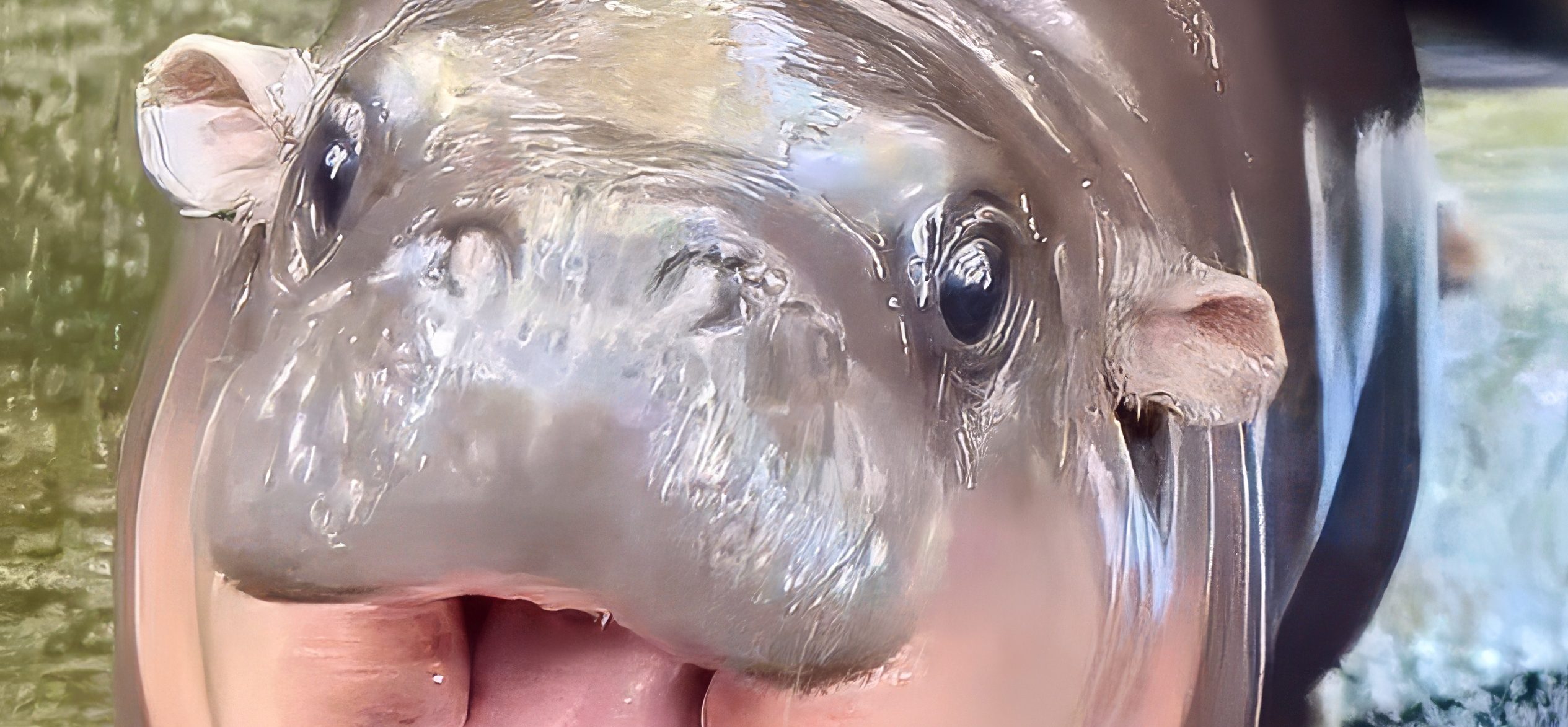
Baby pygmy hippo and rising super star Moo Deng is the most recent example of this longing for enchantment. The expressive baby beast, whose name translates to bouncing pig, was born July 26 and has since taken the world by storm. No doubt you’ve seen Moo Deng somewhere on your timeline in the past week or two. She’s so popular that her zoo has had to limit guests to five minutes with Moo Deng.

What’s precisely so captivating about Moo Deng isn’t so easily quantified. She’s adorable and has a funny name, but there have been many such examples over the years, and I can’t remember any reaching Moo Deng’s popularity. It no doubt helps that her handlers took Moo Deng to social media quickly, which brought her to the world, but all that suggests is that they, too, found something enchanting enough about the hippo to share.
What I can tell you is that I’ve never cared more about pygmy hippos and would possibly take a bullet for Moo Deng.
When she holds her mouth open, appearing to be frozen in a rebellious scream, I say to myself, “I get it.” I understand the hippo – or perhaps feel it understands me? While I sit sore and hunched over a keyboard, a mere months-old hippo in Thailand is taking on the world, shouting at it in my stead. Go get ‘em, Moo Deng.
Does that count as re-enchantment? I think so, and I don’t think it needs to be unique to baby hippos. Kripal thinks the impossible should be so much a part of our everyday life that we no longer view it as such, and Jack Hunter demonstrates how we can utilize it for long-lasting good. So, how many Moo Deng’s might be right around the corner of where you sit now that go unrealized? Is there not something significant, rare and enchanting worth cherishing in your community? I bet if you looked with the same eyes and mindset of a baby hippo, you might find it.
The hourglass on my desk is equal parts mesmerizing and terrifying, like the changes to my body. It’s all a reminder to cherish what time I’ve got left; sand falls quickly through the glass. There’s wonder in any one moment There’s wonder in every moment—from wide-mouthed baby hippos to simply existing at the right time to marvel at them. The world may not need re-enchantment as much as acknowledgment that it already is.
Once that’s realized, it’ll merely be a matter of not forgetting again.

Leave a Reply