The definition of liminal is, to occupy a position at or on both sides of a boundary or threshold; translational. In anthropology, liminality has an important meaning in rites of passage and rituals –the liminal state of a child transitioning to adulthood during an initiation ritual, for example. Parapsychologist George P. Hansen has noted liminality’s role in paranormal phenomena, chiefly in his book “The Trickster and the Paranormal.”
Liminality serves an important function, distinguishing events that often permanently change people. After an initiation ritual, childhood is over forever. However, liminality is not limited to the personal or small scale. War is a liminal event that transitions entire nations to new paradigms.
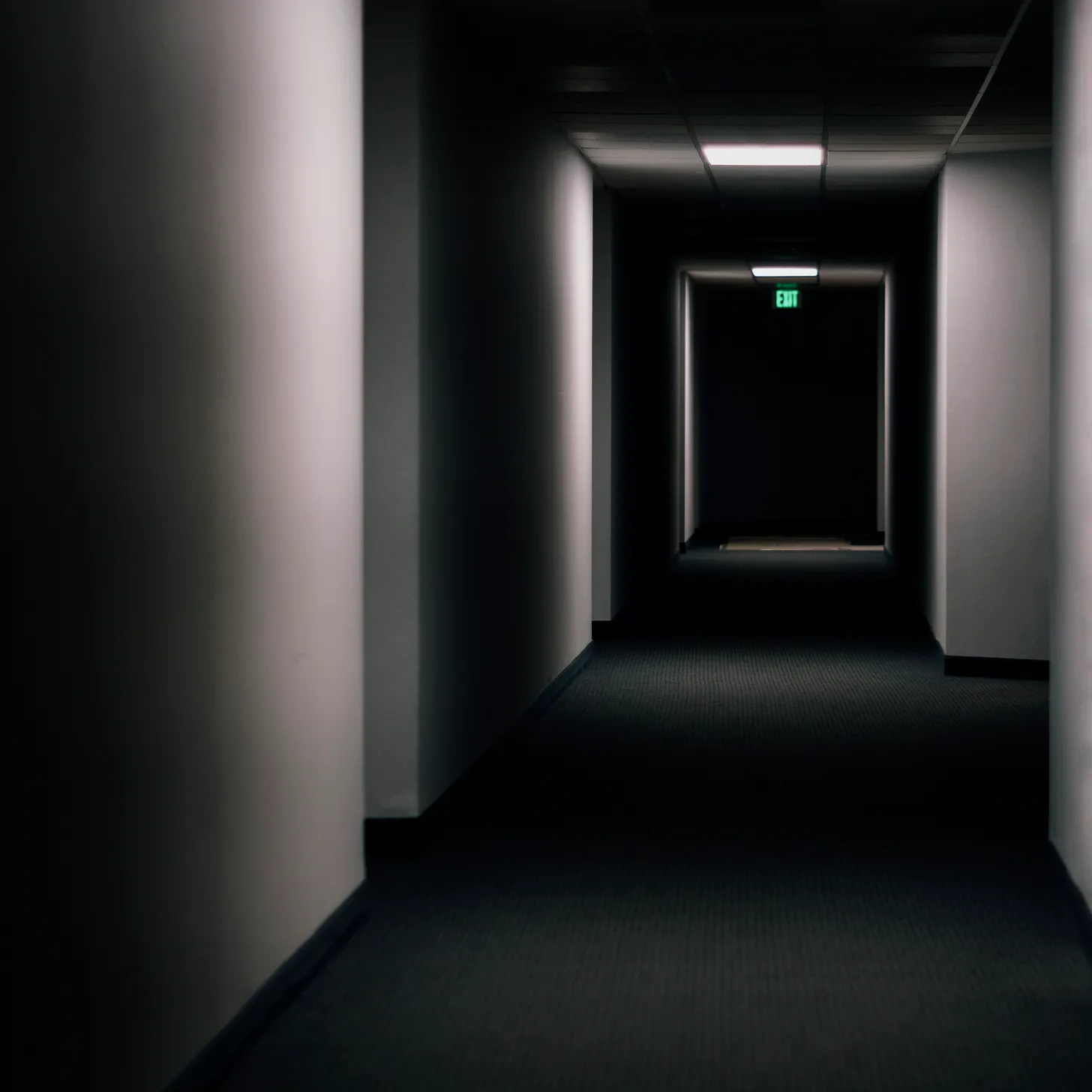
While the role liminality plays personally, societally, and paranormally is recognized, it has also become a trope. Liminality has become synonymous with eerie or unsettling. There are online communities such as Reddit’s r/ LiminalSpace, where users share images of empty corridors, streets, and other “liminal” places. Videos like “SpongeBob and Patrick at Liminal Spaces” on YouTube, with nearly 3 million views, and the popularity of creepypasta fiction like The Backrooms, reflect this trend.
When r/LiminalPlaces was asked to define what a liminal place is, this was the top response:
“Imagine a classroom from your childhood. Surely, you are imagining it in the day, with sunlight spilling in through the windows, and kids shuffling to their desks. This is the state in which a classroom is most frequently seen and serves a purpose for. Now imagine sneaking into your school late at night and everything is empty. It is almost eerie seeing the same classroom at night, in a totally different context. Suddenly its usual purpose has been robbed and it’s just a room, but not quite. Because now it also feels strangely alien and enigmatic to you, a purposeless, otherworldly architecture.
The next day that room would be back to normal, in its default state. It is back to being a real classroom. But that middle phase it was in when you saw it in the night, it’s a liminal phase, a state of transition. And often spaces like that carry eerie characteristics, such as being out of time and out of place. That’s liminal spaces for you. The same could apply for an abandoned mall, an overgrown treehouse, or a swimming pool with all the water gone.” – u/Killcode2, Reddit r/LiminalSpace (2024).

Eerie, strange, alien, enigmatic, otherworldly – the descriptors used in the most upvoted definition of liminal.
There is a concept that incorporates all those notions – uncanny. In Sigmund Freud’s 1919 essay “The Uncanny,” he wrote, “Uncanny is in reality nothing new or alien, but something which is familiar and old-established in the mind and which has become alienated from it only through the process of repression.”
The Freud Museum of London says, “… situations that can provoke an uncanny feeling include inanimate objects coming alive, thoughts appearing to have an effect in the real world, seeing your double (the doppelgänger effect), representations of death such as ghosts or spirits, and involuntary repetitions.”
Notably, while liminality doesn’t inherently have anything to do with the paranormal, it’s grown to be associated with it, while Uncanny has been forgotten but has some paranormal implications.
Hansen can likely be credited with popularizing liminality’s association with the paranormal. Hansen’s work regarding liminality, anti-structure, marginality, and their relationship to the supernatural is fascinating, and far too complex to do justice here. For an inadequate synopsis, Hansen’s research shows a link between liminal, anti-structural times and the occurrence of paranormal phenomena. Think of someone moving homes and experiencing paranormal activity.
Hansen says anti-structure is so connected with the phenomena it’s why paranormal groups rarely stay together for long. For whatever reason, the paranormal is antithetical to structure and routine.
And while Hansen’s work is more than worth consideration, it’s been boiled down to just one word – liminal. Like greed or love, it’s something one’s just meant to get when the paranormal podcaster or writer throws it around. It happened in a liminal place or was experienced during a liminal time. Children experience paranormal phenomena easier than adults because what’s a more liminal time than childhood – an actual statement I’ve heard uttered.
Hansen’s work is rich – 564 pages rich – and it’s been boiled down to the likes of r/LiminalPlaces; a liminal time is a spooky time, and a liminal place is an eerie place.
This commodification of the idea is painfully ironic in a society so devoid of liminalities anthropological quality. Western society has no initiation ritual for its children into adulthood; is so change-adverse that even in the face of a pandemic people are unwilling to adapt; and will openly acknowledge looming ecological catastrophe while refusing to address its causes. Transition is terrifying to the point of paralysis for much of the modern world.

Frustratingly, the commodification of liminality robs the concept of its deeper qualities and connection with the paranormal. If anomalous phenomena thrive during transitional times, it suggests they have an inherent transformational aspect. In a society bereft of the will to change, something that forces people into liminality is sorely needed. I’ve written here about how anomalous phenomena can act as a positive societal transformer.
When we forget the transformational aspect of liminality and use it as an intelligent-sounding synonym for eerie, we lose a critical lens to examine paranormal phenomena. There is a reason these often deeply personal events share key qualities with war and ritual.
As Hansen posits in his 2011 paper, Liminality, Marginality, Anti-Structure, and Parapsychology:
“In our culture, the moneys devoted to fictional portrayal of the paranormal in books, TV, and movies dwarf those allocated to research. The phenomena occurring today are marginalized in mainstream religion and neglected, or ridiculed, in science. These facts say something fundamental about the nature of the phenomena, and any comprehensive theory of the paranormal must explain them.”
When we lose the liminal to pop culture understandings, we risk never being able to understand a fundamental aspect of anomalous phenomena.
![[Unlocked] Exploring “The Goblin Universe,” a Paranormal Classic That Holds Up](https://driftlesstimesmedia.com/wp-content/uploads/2025/08/cover-cropped.png)
Leave a Reply