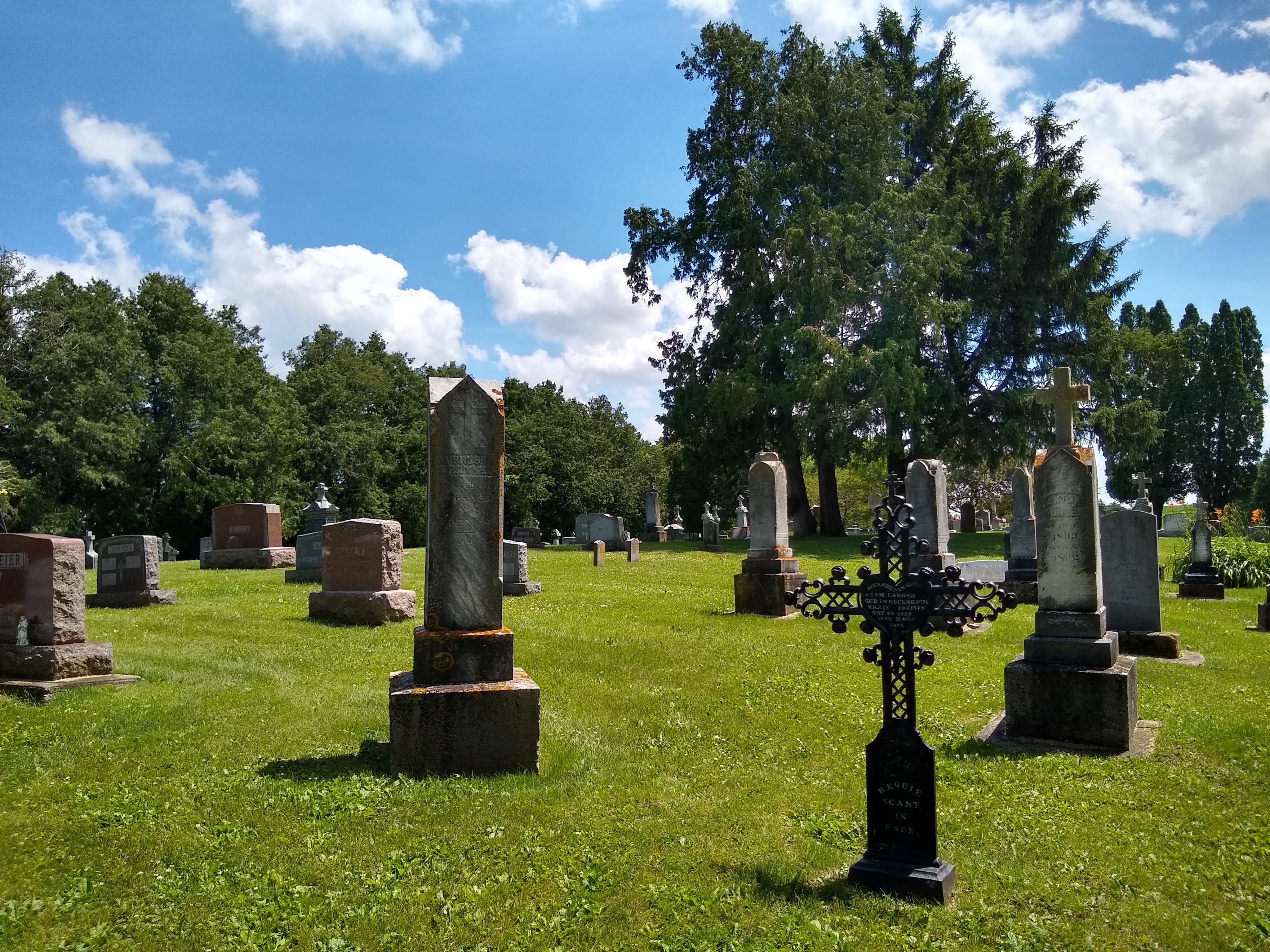
It’s a June morning in Madison, Wisconsin, and the lighthearted cacophony of summer’s song surrounds me. Cardinals cheer, squirrels chatter and tussle, and a light drizzle from a passing cloud makes everything shine.
The cool morning breeze smells of moss and wet earth. A faint ghostly fog surrounds me, its greyness a reminder of the recent spring’s liminal presence — everything is somewhat awake, somewhat asleep.
I am also surrounded by people. Thousands of them on all sides of me in groups, facing all different directions, yet their very presence is secondary to the exuberance of nature.
At this moment, we are all in the same place at the same time — mayors, politicians, physicians, lawyers, governors, businessmen, Freemasons, soldiers and generations of Madison’s historical elite. Some have won Nobel prizes. Others won the hearts of their community for their commitment to social justice. Streets and neighborhoods bear their names: Atwood, Orton, Vilas, Tenney and Doty, among many others.
However, these people do not contribute to the summertime symphony — because I am in Forest Hill Cemetery. Their melody has long since subsided, but their collective echo reverberates throughout the local history.

We are in different stages of historical significance and in different forms. Some have been here for over 100 years; some were just laid to rest yesterday.
While I have no loved ones (that I know of) resting here, I feel like I am right where I want to be on this misty summer morning. Forest Hill Cemetery is a beautiful place to wander, ponder and muse.
Designed in the 1850s, this garden cemetery provided a space that reflected the spiritual zeitgeist of the time — a place where the beauty of nature softened the repulsiveness of death. Some of the trees are hundreds of years old, having provided shade for untold grieving families and Sunday picnickers. Carriage steps scattered throughout plots are a peaceful reminder of the families that once gathered here to visit their loved ones all those years ago.
Death is inevitable, but approachable at Forest Hill.
I find elaborate symbols carved on some of these graves: angels and birds, books and chains, lilies and lambs, unfinished columns symbolizing a life that ended too soon with intertwined roses indicative of a mother and infant who died in childbirth.
Many of the headstones have been darkened by the rain. Angels weep while lichen blush, their stubborn and colorful presence a hint of immortality. I stroke a headstone mottled with the fungi-like lifeform, imagining that someone a century before me might have done the same.
I question what it means to be alive in a cemetery — an irony not lost on me.
Not all cemeteries are as regularly tended to as Forest Hill. Many are hidden from back-country roads, being reclaimed by Mother Nature and her wildflowers. Here, many of the markers are strewn with bouquets, toys, windchimes, coins and other keepsakes.
Yet others — hundreds — have been forgotten by time.
Weeds poke through cracked epitaphs and broken headstones stick out like crooked teeth — their names weathered by time. A carved hand once pointing to the heavens above now points to the grave beside it, the headstone toppled over a century ago, slowly being consumed by soil, not unlike the occupant beneath.

Did he think about death? Did he hope his grave would be tended to generations in the future?
How did he shape the world I now live in today?
We revere the architectural marvel that is our state capitol but forget those who were killed while building it. We see the towering monuments of governors’ past, but often step over the plain markers of those who encouraged and supported them. We mourn those who died in their homes, but forget those who scrubbed their floors.
So, I visit William Miller (Section 24), an employee of then-Governor Robert La Follette, who was instrumental in improving the lives of African Americans in post-Civil War Madison and whose dying wish was to be carried to the polls so he could vote. I thank him.
I visit Annie Stewart (Section 6), founder of the original Attic Angels charity, who threw herself down a neighbor’s well one chilly spring morning after a particularly grueling bout with melancholia. I apologize to her.
I visit Hettie Pierce (Section 24), a former slave and the longest-living Madisonian at 115 years old. She outlived all 11 of her children. I congratulate her on a remarkable life.
And I seek out to find William Edgar (Section 2), one of the six construction workers killed in the 1883 collapse of the Capitol’s southwest wing.
“Where are you, Bill?” I whisper to the breeze, scanning the scores of markers before me.
A robin lands atop a tombstone about twenty yards ahead and lets out a partial song. For a brief moment, the rain ceases.
As I approach, I find it’s William Edgar’s monument — tall, leaning slightly and adorned with a “perpetual care” marker.
My laughter startles the robin, who leaves as abruptly as she arrived.
They say every city has its ghosts, but maybe a ghost is just an unfinished story waiting to be told, and it reminds me the dead are indeed still with us — in some form.
Let’s go visit them.

Always on the lookout for the next weirdest thing to add to her obituary, Kjersti goes through life with her heart on her sleeve, her head in the clouds and a cat on her shoulders. Her essays and photos have appeared in The Feminine Macabre, Haunted Magazine, Wisconsin Frights and lifestyle blog Sweatpants & Coffee. She is the lead tour guide for Mad City Ghost Walks (.com). With a foot in both worlds, Kjersti advocated for the continued research of the paranormal and leaving the world a little weirder than you found it. (Instagram: @kjee83)
Want to have your writing featured on Driftless Times Media? View our submission guidelines and get in touch!

![[Unlocked] Exploring “The Goblin Universe,” a Paranormal Classic That Holds Up](https://driftlesstimesmedia.com/wp-content/uploads/2025/08/cover-cropped.png)

Leave a Reply