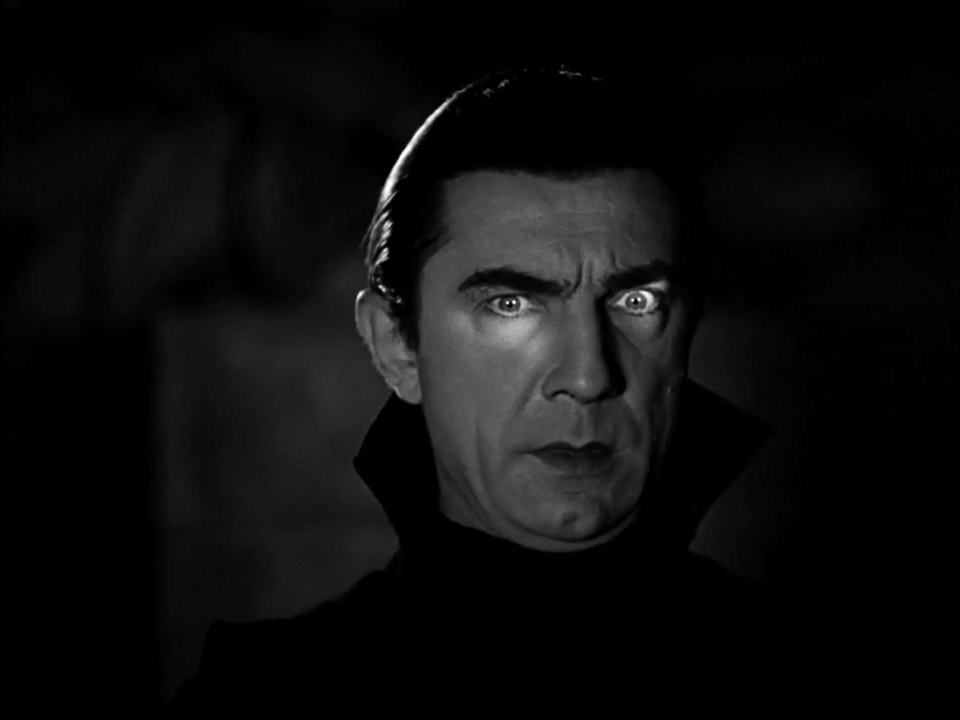
Happy Halloween and happy surprise Halloween newsletter!
Spooky Season is drawing to a close today, signaling the start of short daylight hours and long, black nights – perfect for creatures like vampires.
The vampire is a fascinating archetype. Blood-drinking, undead entities are a cross-cultural nightmare found in different shades throughout time and around the globe. The ancient Mesopotamians had stories of blood-drinking demons, and today Dracula’s image is as ubiquitous as Jesus’ – perhaps even more so, as the Good Lord has never starred in a $1.4 billion box office franchise.

Even the smallest corner of the Midwest is home to a vampire; I’ve written about it a couple of times. And today, in honor of Halloween and horror movies, I’m returning to the Mineral Point Vampire and exploring it through the lens of 1970s vampire movies.
More Vampires Than You Can Shake a Stake At
The 1970s were an exciting time for vampires. The creatures were around every corner in media, and the decade saw a handful of notable, pop culture-shaping releases such as Anne Rice’s “Interview with the Vampire.”
’70s cinema was particularly infested with the fiends. Gary A. Smith’s book “Vampire Films of the 1970s: Dracula to Blacula and Every Fang Between” details over 100 movies.
“The ’70s saw countless variations on the vampire theme as filmmakers everywhere jumped on the bloody bandwagon. There were black vampires, kung fu vampires, lesbian vampires, hippie vampires, canine vampires, comic vampires, and even some who managed to adhere to more traditional interpretations. It seemed as if a new vampire movie opened in cinemas every week,” Smith writes in the opening of his book.

Movies – particularly horror movies – often reflect their times and the cultural upheavals and fears taking place. Smith says this is likely why the 70s were so vampire-obsessed.
“Often creative, sometimes silly, but seldom dull, the vampire movies of the ’70s were unique. They reflected turbulent times when minority groups were gaining rightful recognition and the Sexual Revolution was in full swing. Abundant female nudity became a major ingredient in ’70s vampire movies, as did graphic bloodletting,” he writes.
To wit, Smith cites Orville Stoeber, composer for 1971’s “Let’s Scare Jessica to Death”, who said: “The nation was mentally and morally ill in the early ’70s of America. Director John Hancock used Jessica as a metaphor for our moral confusion of that time.”
As previously noted, vampires weren’t merely contained to the silver screen. Prior to the publication of “Interview with the Vampire” in 1976, Stephen King’s “Salem’s Lot” was published in 1975. In comics, Morbius, Spider-Man’s vampiric villain, made his debut in 1971. Additionally, Marvel put out a number of vampire and Dracula-themed horror comics in the decade. The most popular of these was “The Tomb of Dracula,” which ran from 1972 to 1979, and featured the first appearance of the character Blade in 1973.

Television, too, saw its share of vampires. Notably, “Dark Shadows” ended its original run in 1971, and in 1972, the made-for-TV movie “The Night Stalker” aired. The success of the latter spawned a sequel with 1973’s “The Night Strangler” and then the short-lived series “Kolchak: The Night Stalker”, which developed a cult following during its 1974-1975 run.
Additionally, a play version of “Dracula” opened on Broadway in October 1977.
So, with a decade chock-full of vampires shaping the zeitgeist, what influence might this have had on the Mineral Point Vampire sighting of 1981?
A Graveyard Smash
For those unfamiliar with the Mineral Point Vampire, here’s a quick rundown:
On March 30, 1981, Officer Jon Pepper of the Mineral Point Wisconsin Police Department was on routine patrol, shining his flashlight through the gates of Graceland Cemetery, looking for vandals. Instead, he found a humanoid figure standing over six feet tall, wearing a cape. The thing fled when Pepper spotted it and the officer pursued. However, Pepper lost sight of it after the vampire jumped the cemetery fence and escaped into the rural Wisconsin countryside.

There are claims of the vampire being sighted in recent decades – though I’ve proved they’re bologna. It’s Pepper’s 1981 sighting that remains a mystery.
What exactly the officer saw that night is up for debate. Townsfolk knew Pepper as a prankster by some accounts and thus never believed his vampiric tale. However, he’s never recanted the story and remains silent about what he saw to this day. It could be a case of a man genuinely haunted by his encounter with the unknown or a prankster whose story grew larger than intended. Either way, what Jon Pepper saw that night is up for speculation, so let’s speculate.
The most interesting feature of what Pepper claims to have seen is the thing’s garb. Pepper’s description of the vampire’s costume draws immediate comparisons to Dracula by journalists, likely imagining some riff on the classic Bela Lugosi costume. It’s an odd, possibly cumbersome, costume for a prankster or otherwise to choose, especially in March.
Physically, Pepper described the creature as either being incredibly pale or having painted its face white. He also describes the creature as “ugly,” and that it stood around 6-foot-five. He told a newspaper: “I’ve never seen anyone that tall before in Mineral Point. I couldn’t match his stride and I’m 6-foot-two. It’s the weirdest thing that’s ever happened to me.”
It’s an odd combination of imagery. On the one hand, whatever Pepper saw was dressed like Dracula, but on the other hand, it physically resembles a different legendary vampire – Nosferatu.

And isn’t that peculiar, because in 1979 – just two years prior to Pepper’s sighting – both Dracula and Nosferatu hit the cinemas one last time in each’s greatest showing of the decade.
Released on July 13, 1979, and directed by John Badham, Dracula was an adaptation of the 1977 Broadway play mentioned above, with Frank Langella reprising his role as Dracula from the play for the film. The movie had the largest budget of any Dracula film to date then, and Smith writes, “[It] was widely considered to be the ‘Cadillac’ of Dracula films.” The film made $20 million at the box office and was met with tepid reviews.
Somewhat inversely, Werner Herzog’s Nosferatu the Vampyre was critically praised but only made $2.5 million worldwide. It was viewed as more of an art-house film rather than a horror movie. Herzog was paying direct homage to the original 1922 Nosferatu: A Symphony of Horror with his film. As Smith reported, “Werner Herzog considered Nosferatu to be ‘the very best and most important film ever made in Germany.’”
To recap, two years before the Mineral Point Vampire appeared, two of the most notable vampire movies from a decade filled to the brim with vampire media were released, and the creature in Mineral Point shared resemblances with both Nosferatu and Dracula.

Coincidence? Who knows, but the co-creation hypothesists are no doubt foaming at the mouth.
Into the Night
As Halloween passes with your head full of horror, let the 1970s’ decade-long obsession with the undead and the Mineral Point Vampire remind you that what’s shown on the silver screen or read in a book might not always remain solely in the realm of fiction.
If it’s true that today the veil between worlds draws thin, then you may want to be prepared to come face-to-face with yesterday’s fiction. How many ghost stories have you read this month, paranormal podcasts listened to, or vampire movies watched? What’s primed in your mind to cross the veil?
It might not just be kids wearing scary masks you find on your doorstep tonight – just ask Officer Pepper what’s possible.
Happy Halloween.


![[Unlocked] Exploring “The Goblin Universe,” a Paranormal Classic That Holds Up](https://driftlesstimesmedia.com/wp-content/uploads/2025/08/cover-cropped.png)

Leave a Reply